Farmeconomia. Health economics and therapeutic pathways 2026; 27(1): 55-66
https://doi.org/10.7175/fe.v27i1.1613
The Socio-Economic Burden of Pruritus in Patients with Primary Biliary Cholangitis (PBC) in Italy: a Comprehensive Model-Based Cost-of-Illness Analysis
Paolo Angelo Cortesi1,2, Paolo Cozzolino1, Ippazio Cosimo Antonazzo3, Marco Carbone4,5, Claudia Pitotti6, Lorenzo Giovanni Mantovani1,2
1 Research Centre on Public Health (CESP), University of Milano-Bicocca, Monza, Italy.
2 Laboratory of Public Health, IRCCS Istituto Auxologico Italiano, Milan, Italy.
3 Department of Environmental and Prevention Sciences, University of Ferrara, Ferrara, Italy.
4 Department of Medicine and Surgery, University of Milano-Bicocca, Monza, Italy.
5 Hepatology and Gastroenterology Unit, ASST Grande Ospedale Metropolitano Niguarda, Milan, Italy.
6 Gilead Sciences Italy
Abstract
BACKGROUND AND AIM: Cholestatic pruritus represents one of the most debilitating symptoms in patients with Primary Biliary Cholangitis (PBC), affecting 50-90% of them. Aim of this study was to estimate the annual socio-economic burden associated with pruritus in patients with PBC in Italy.
METHODS: A prevalent-based cost-of-illness (COI) probabilistic model was developed with a one-year time horizon, adopting the Italian societal perspective. The model simulated adult patients with PBC characterized by presence and severity level of pruritus. The model included data retrieved from the literature and related to PBC with pruritus epidemiology, direct costs, indirect costs, and intangible costs to estimate the one year direct and indirect costs associated to pruritus and the Quality-Adjusted Life Years (QALYs) lost. Deterministic and probabilistic sensitivity analysis were performed to test alternative scenarios and define the proper 95% Confidence Interval (CI).
RESULTS: The model estimates a prevalence of 10,076 adult patients with a diagnosis of PBC: 5,141 with mild pruritus, 2,013 with moderate and 1,006 with severe. The socio-economic annual burden associated with pruritus was € 6.75 million (95%CI 4.85-7.64). Indirect costs represent the main driver at € 5.00 million (95%CI: 3.52-5.59). The model reported a high impact on patients’ quality of life with 1,220 QALYs lost due to pruritus. Scenario analysis showed a significant higher burden if unemployment due to pruritus was included in the analysis and a significant variability associated with prevalence. Reduction of pruritus of 30%, 50% and 70% could lead to a potential burden reduction of € 0.89, € 1.49 and € 2.09 million and a QALY gain of 366, 610, and 850, respectively.
CONCLUSIONS: Pruritus in PBC generates a significant socio-economic burden, primarily driven by loss of work productivity, highlighting the need for more effective therapeutic strategies to reduce the impact and improve the quality of life of these patients.
Keywords
Primary Biliary Cholangitis; Cholestatic pruritus; Cost-of-illness; Quality of life; Healthcare costs; Indirect costs
Received: 11 June 2026
Accepted: 6 October 2026
Published: 29 October 2026
Introduction
Primary biliary cholangitis (PBC) is a progressive, chronic cholestatic liver disease characterized by immuno-inflammatory destruction of small bile ducts, leading to cholestasis and the accumulation of toxic bile acids [1]. Untreated PBC can lead to advanced liver fibrosis, decompensated cirrhosis, hepatocellular carcinoma (HCC), liver failure, the need for liver transplantation, and premature mortality [1,2]. Worldwide, the estimated prevalence of PBC is 18.1 cases per 100,000 people with an incidence rate of 1.8 per 100,000 person-years [3]. Global prevalence has increased over time, with the highest increase reported in the Western Pacific region [3].
Patients with PBC frequently reported debilitating symptoms like fatigue, pruritus, and cognitive impairment, which severely impair their health-related quality of life regardless of ethnicity [1,4,5]. The most common symptoms of PBC are cholestatic pruritus, sicca complex, and chronic fatigue [2]. Pruritus affects up to 90% of patients during their disease course, with more than one-third suffering moderate-to-severe itching [6–8]. Severe pruritus can become unbearable, leading to sleep deprivation, social isolation, and, in severe cases, suicidal ideation [4,6,9]. In extreme cases, pruritus can justify liver transplantation, even in the absence of cirrhosis or decompensated liver disease [4,9]. Pruritus in PBC patients typically fluctuates over time and is generally not directly correlated with disease severity [9]. Although pruritus intensity fluctuates over time and does not directly correlate with biochemical or histological disease severity it remains systematically under-recorded in medical records and under-treated in clinical practice, largely due to limited clinical awareness and historically constrained therapeutic options [4,7].
While cholestatic pruritus was historically understudied, a growing body of literature highlights its substantial impact on healthcare resource utilization, work productivity, daily functioning, and overall Health Related Quality of Life (HRQoL) [4,10,11]. In a recent US study, patients with PBC and moderate-severe pruritus demonstrated significantly worse outcomes across multiple instruments, including the 5-D Itch, EQ-5D, FACIT-Fatigue, and CLDQ-PBC. Notably, patients with PBC and moderate-severe pruritus reported worse scores in all PBC-40 domains except for the Emotional domain. This clinical burden translated into a significantly higher rate of activity impairment (57% vs. 36%; p < 0.001) and a lower employment rate (42% vs. 53%) for patients with moderate-severe pruritus. Despite the high burden, fewer than 25% of patients with moderate-severe pruritus were receiving targeted antipruritic therapy [4].
While new evidence has emerged regarding the socio-economic burden of pruritus in patients with PBC, a comprehensive cost-of-illness (COI) evaluation integrating direct medical costs, indirect societal costs, and humanistic losses (QALY impairment) remains lacking. Evaluating the burden of debilitating symptoms such as pruritus in PBC patients is particularly important to fully understand the clinical and socio-economic relevance in PBC, highlighting the possible need of specific intervention and plan to improve PBC management. Indeed, effective management must focus not only on slowing the progression of diseases but also on reducing the impact of relevant symptoms that severely affect patient life even in the early stage of diseases. Therefore, the aim of this study was to estimate the annual socio-economic burden associated with pruritus in adult patients with PBC in Italy through a model stratified across different severity levels.
Methods
To estimate the socio-economic burden associated with pruritus in patients with PBC in Italy, a prevalent-based (COI) probabilistic model was developed using Microsoft Excel®.
The model architectures (Appendix 1) reconstructs the distribution and number of patients requiring treatments across different pruritus severity levels. In line with the societal perspective adopted for this study, all direct, indirect and intangible costs were included. For the estimation of direct costs, a bottom-up micro-costing approach was employed. This method involves estimating the direct costs associated with the different levels of pruritus severity and multiplying the per-patient cost by the prevalence of the patients in each severity category. Indirect costs were estimated applying the human capital approach, measuring earnings deficits due to production losses caused by the symptom for each level of severity. Information regarding this type of cost is notably difficult to find; for this reason, the calculation of total indirect costs was made possible only through the estimation of costs due to absenteeism (workdays lost due to the symptom). In the base case, monetized indirect costs were calculated based on absenteeism (workdays lost due to the symptom). In addition, the broader impact on productivity was further characterized by estimating the number of working days with reduced efficiency (presenteeism) and the number of patients experiencing daily activity impairment. Finally, the model evaluates intangible costs as Quality Adjusted Life Years (QALYs) lost using the disutility associated with the different levels of pruritus severity. The model adopted a one-year time horizon, using 2026 as the reference year for the cost analysis.
This approach is suited for chronic diseases like PBC, where pruritus is a persistent or recurrent condition generating continuous healthcare expenditure, loss of work capacity, and ongoing quality-of-life decrements across the entire affected population within a given timeframe.
Epidemiological and clinical data
The population simulated in the model includes all adult patients with a diagnosis of PBC managed by Italian specialist centers. The population size was derived applying a PBC prevalence of 27.9 per 100,000 adults in Italy [12]. To reflect real-world clinical engagement, this population estimate was adjusted using national market research conducted by IQVIA (Data on file) [13], which estimated that 87.80% of prevalent cases are formally diagnosed and 82.2% of diagnosed patients are actively engaged in specialist care (Table I).
The number of patients estimated was stratified by the model in four different pruritus severity classes (none, mild, moderate and severe) based on established epidemiological data reported in the literatures [6,8]. In details, 81% of PBC patients reported pruritus; among symptomatic patients, 63.0% had mild pruritus, 34.0% moderate and 17.0% severe [6,8]. These data enable the model to estimate the severity-stratified population and evaluate the associated socio-economic burden in Italy.
|
Variables |
Value |
Distribution |
References |
|
|
Epidemiological data |
||||
|
Italian adult population (≥18 years), n. |
50,040,752 |
– |
[18] |
|
|
PBC prevalence, per 100,000 people |
27.9 |
– |
[12] |
|
|
Percentage diagnosed, % |
87.8 |
– |
[13] |
|
|
Percentage engaged in care, % |
82.2 |
– |
[13] |
|
|
Clinical data (Pruritus stratification) |
||||
|
PBC patients with pruritus, % |
81.0 |
Beta |
[6] |
|
|
63.0 |
Dirichlet |
[6] |
|
|
34.0 |
Dirichlet |
[6,8] |
|
|
17.0 |
Dirichlet |
[6,8] |
|
|
Direct cost data |
||||
|
PBC patients with mild pruritus |
Patients required visits for pruritus, % |
100 |
Beta |
[14] |
|
Visits per year. n. |
3.0 |
Normal |
[14] |
|
|
Blood tests monitoring, % |
100 |
Beta |
[14] |
|
|
Test per year, n. |
2.0 |
Normal |
[14] |
|
|
Patients using |
||||
|
30 |
Beta |
[14] |
|
|
30 |
Beta |
[14] |
|
|
5 |
Beta |
[14] |
|
|
15 |
Beta |
[14] |
|
|
20 |
Beta |
[14] |
|
|
PBC patients with moderate pruritus |
Patients required visits for pruritus, % |
100 |
Beta |
[14] |
|
Visits per year, n. |
3.0 |
Normal |
[14] |
|
|
Blood tests monitoring, % |
100 |
Beta |
[14] |
|
|
Test per year, n. |
2.0 |
Normal |
[14] |
|
|
Patients using |
||||
|
55 |
Beta |
[6,14] |
|
|
55 |
Beta |
[6,14] |
|
|
9 |
Beta |
[6,14] |
|
|
27 |
Beta |
[6,14] |
|
|
36 |
Beta |
[6,14] |
|
|
PBC patients with severe pruritus |
Patients required visits for pruritus, % |
100 |
Beta |
[14] |
|
Visits per year, n. |
6.0 |
Normal |
[14] |
|
|
Blood tests monitoring, % |
100 |
Beta |
[14] |
|
|
Test per year, n. |
4.0 |
Normal |
[14] |
|
|
Patients using |
||||
|
55 |
Beta |
[6,14] |
|
|
55 |
Beta |
[6,14] |
|
|
9 |
Beta |
[6,14] |
|
|
27 |
Beta |
[6,14] |
|
|
36 |
Beta |
[6,14] |
|
|
Unit costs |
First Visits, € |
22.0 |
– |
[15] |
|
Follow-up visits, € |
16.0 |
– |
[15] |
|
|
Blood test, € |
4.4 |
– |
[15] |
|
|
Cholestyramine, 4 gr powder— 50 sachets), €/per pack |
4.5 |
– |
[16,17] |
|
|
Rifampicin (300 mg—100 cps), €/per pack |
4.9 |
– |
[16,17] |
|
|
Naltrexone (50 mg—28 cps), €/per pack |
25.3 |
– |
[16,17] |
|
|
Gabapentin (300 mg—50 cps), €/per pack |
18.0 |
– |
[16,17] |
|
|
Bezafibrate (400 mg—30 cps), €/per pack |
7.7 |
– |
[16,17] |
|
Table I. Epidemiological, clinical and direct cost data input
PBC: primary biliary cholangitis; cps, capsules
Direct cost
Direct costs were estimated using a bottom-up approach. Specific healthcare resources required to manage pruritus in PBC were adapted from previous assessment of PBC treatments conducted by the National Institute for Health and Care Excellence (NICE), England and Wales [14]. The healthcare resources included were: visits, blood tests and pharmacological treatments (cholestyramine, rifampicin, naltrexone, gabapentin, and bezafibrate). The percentage of patients using these resources and the frequency of utilization are reported in Table I, stratified by pruritus severity. The unit cost of each healthcare resource was retrieved from the ambulatory tariffs of the Italian National Healthcare Services (Table I), while the ex-factory drug costs were retrieved from the list of drugs reimbursed by the Italian Medicines Agency (AIFA) [15–17].
Indirect costs
The impact of pruritus in terms of activity impairment due to PBC, work time missed due to PBC (absenteeism) and impairment while working due to PBC (presenteeism) was included in the model to account for indirect effects and costs associated with this symptom. While activity impairment and presenteeism were estimated only as the number of patients with activity impairment and the number of days with presenteeism, the absenteeism was estimated both as the number of working day lost and as costs estimated using the human capital approach and the average annual Italian salary (€ 33,523.00) (Table II).
The data included in the model to estimate the indirect costs (Table II) were retrieved from a recent study that used the Work Productivity and Activity Impairment (WPAI) questionnaire to assess how pruritus impacts work productivity and daily activities in patients with none/mild pruritus versus moderate/severe pruritus [4].
|
Variables |
Value |
Distribution |
References |
|
|
Indirect cost data |
||||
|
PBC patients with no/mild pruritus |
Working patients, % |
53.0 |
Beta |
[4] |
|
Activity impairment due to PBC, % |
36.3 |
Beta |
[4] |
|
|
Work time missed due to PBC (absenteeism), % |
5.8 |
Beta |
[4] |
|
|
Impairment while working due to PBC (presenteeism), % |
32.4 |
Beta |
[4] |
|
|
PBC patients with moderate/severe pruritus |
Working patients, % |
42.0 |
Beta |
[4] |
|
Activity impairment due to PBC, % |
56.6 |
Beta |
[4] |
|
|
Work time missed due to PBC (absenteeism), % |
9.8 |
Beta |
[4] |
|
|
Impairment while working due to PBC (presenteeism), % |
46.5 |
Beta |
[4] |
|
|
Unit costs |
Average gross annual salary in Italy, € |
33,523 € |
– |
[19] |
|
Working days per year, n. |
251 |
– |
[19] |
|
|
Intangible cost (Quality of life) data |
||||
|
Disutility associated to |
||||
|
0.12 |
Beta |
[11] |
|
|
0.11 |
Beta |
[11] |
|
|
0.38 |
Beta |
[11] |
|
Table II. Indirect and intangible (quality of life) cost data input
PBC: primary biliary cholangitis
Intangible cost (Quality of life)
To perform a comprehensive cost-of-illness analysis, the model also included the humanistic burden, quantified as QALYs lost due to pruritus. To estimate the QALYs losses, specific disutility weights were retrieved from the literature and assigned to each pruritus severity level: mild (0.120), moderate (0.110) and severe (0.380) [11]. These disutility weights were applied over the entire 1-year simulation period to each pruritus severity subgroup to estimate the total annual QALYs lost due to pruritus.
Analysis
A base case analysis was performed to estimate the direct, indirect and intangible costs associated with cholestatic pruritus. Direct costs were estimated as overall direct costs associated with pruritus and as cost associated with each healthcare resources. Indirect costs associated with pruritus were estimated as the number of patients with daily activities impaired by pruritus, the number of days with reduced productivity, the number of working day lost, and costs associated with workdays lost. Finally, the intangible costs were assessed as the number of QALYs lost due to pruritus. All outcomes were estimated for the overall population and for each severity subgroup. In order to include the variability of the data used to populate the model, a Probabilistic Sensitivity Analysis (PSA) was performed to estimate 95% Confidence Intervals (CI) for the outcomes. Uncertainty distributions were defined for each parameter using the standard error and a specific distribution based on the type of parameter.
Additionally, a sensitivity analysis was conducted by simulating alternative scenarios: 1) including the percentage (11%) of unemployed patients due to moderate/severe pruritus in the socio-economic estimation [4], and 2) simulating a different prevalence of pruritus within PBC patients based on alternative literature data [7,8]. Finally, an analysis was performed to estimate the potential socio-economic burden reduction associated with decreasing the prevalence and severity of pruritus within the Italian PBC population.
Model structure and mathematical logic underwent internal validation, including extreme-value testing and independent double-programming of cost-aggregation formulas.
Results
Base case
The model estimates 10,076 adult patients with a diagnosed with PBC and managed in Italian centers. Among these patients, 1,916 had no pruritus, 5,141 had mild pruritus, 2,013 moderate, and 1,006 severe.
The overall cost associated with healthcare resource consumption and patients’ loss of productivity due to pruritus in Italy was € 6,746,716 (95%CI: 4,847,317-7,638,608). Total direct costs were € 1,749,968 (95%CI: 1,331,748-2,053,309), most of these costs were associated with pharmacological treatments and visits (Table III). While individual healthcare resource consumption was lower for mild pruritus, this group accounted for the largest share of overall direct costs (50.9%) due to the high prevalence of this severity level among PBC patients with pruritus. The burden of pruritus was mainly associated with indirect costs (74.1% of the overall cost); with 37,413 workdays lost and 194,143 days of presenteeism estimated for Italian PBC patients with pruritus annually (Table IV). Furthermore, pruritus impaired daily activities in 2,075 patients with PBC. Finally, pruritus also demonstrated a significant impact on patients’ quality of life with 1,220 yearly QALYs lost due to pruritus in PBC patients (Figure 1).
The bar chart displays mean estimated annual QALY decrements stratified by pruritus severity categories and for the overall symptomatic Italian PBC population. Error bars represent 95% Confidence Intervals (95% CI) derived from probabilistic sensitivity analysis (PSA)
|
Parameters |
Mild pruritus |
Moderate pruritus |
Severe pruritus |
Total |
|
Visits, € (95% CI) |
277,614 (203,298–343,948) |
108,702 (68,843–153,391) |
108,648 (47,503–184,059) |
494,964 (319,644–681,398) |
|
Blood test, € (95% CI) |
44,727 (32,754–55,414) |
17,513 (11,091–24,713) |
17,504 (7,653–29,654) |
79,744 (51,498–109,781) |
|
Pharmacological treatment, € (95% CI) |
567,864 (415,849–703,550) |
404,998 (256,494–571,500) |
202,398 (88,494–342,880) |
1,175,260 (760,837–1,617,930) |
|
Total direct cost, € (95% CI) |
890,205 (651,900–1,102,912) |
531,213 (336,428–749,602) |
328,551 (143,651–556,593) |
1,749,968 (1,331,748–2,053,309) |
Table III. Annual direct healthcare costs, annual indirect costs, and productivity impairment associated with pruritus in Italian PBC patients. Data are presented as mean and 95% Confidence Intervals (95% CI)
|
Parameters |
None/Mild pruritus |
Moderate/Severe pruritus |
Total |
|
Patients with activity impairment due to PBC, n. (95% CI) |
1,357 (1,159–1,554) |
718 (384–780) |
2,075 (1,543–2,334) |
|
Absenteeism, n. days (95% CI) |
19,759 (16,867–22,629) |
17,654 (9,455–19,190) |
37,413 (26,322–41,819) |
|
Cost of absenteeism due to PBC, € (95% CI) |
2,638,961 (2,252,751–3,022,277) |
2,357,787 (1,262,818–2,563,022) |
4,996,748 (3,515,569–5,585,299) |
|
Presenteeism, n. days (95% CI) |
110,378 (94,224–126,410) |
83,765 (45,142–100,581) |
194,143 (139,366–226,991) |
Table IV. Annual indirect costs and productivity impairment associated with pruritus in Italian PBC patients. Data are presented as mean and 95% Confidence Intervals (95% CI)
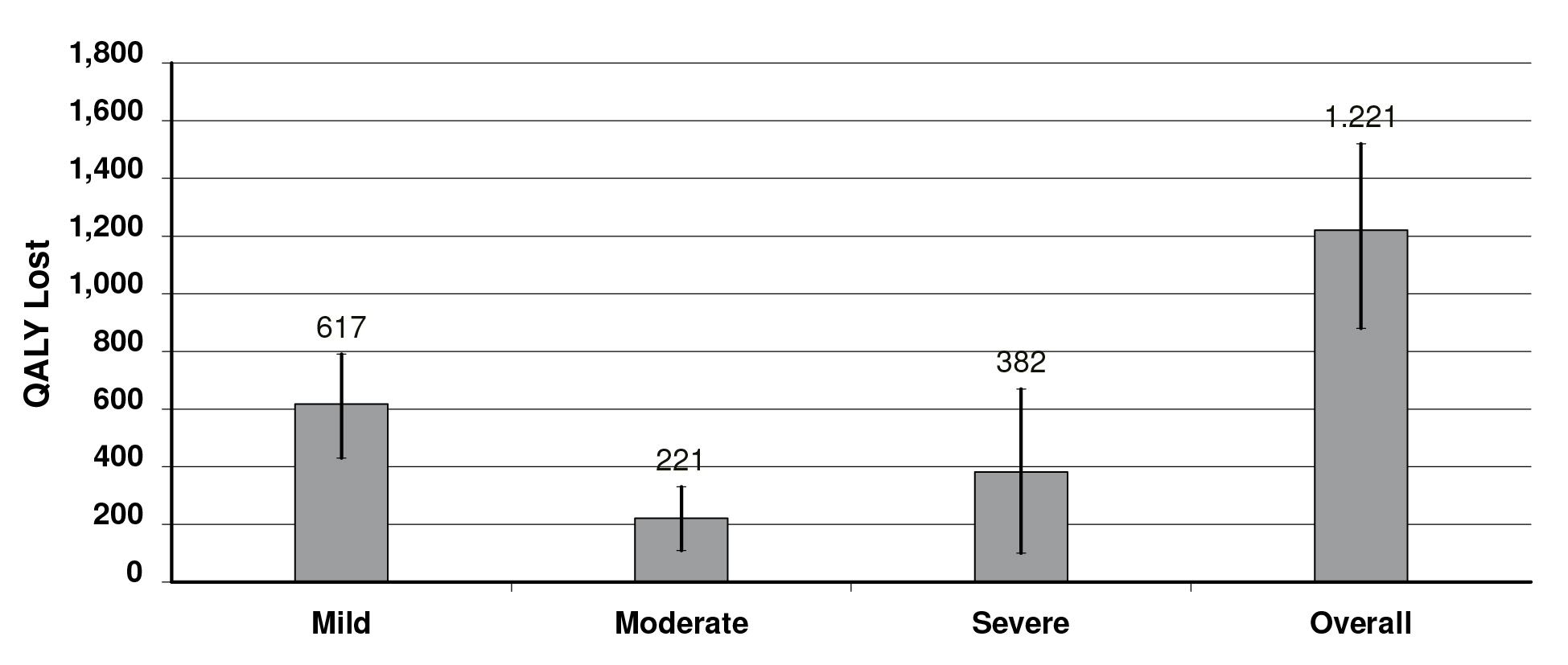
Figure 1. Annual intangible costs: QALYs lost due to pruritus in Italian PBC patients
The bar chart displays mean estimated annual QALY decrements stratified by pruritus severity categories and for the overall symptomatic Italian PBC population. Error bars represent 95% Confidence Intervals (95% CI) derived from probabilistic sensitivity analysis (PSA)
Sensitivity analyses
The alternative scenarios simulated to test the impact of symptom prevalence on the socio-economic burden reported a variation in overall costs from € 4,614,480 to € 7,035,979, moving from the lower to the higher prevalence rate. Total direct costs changed from € 496,571 to € 1,920,622, while the number of workdays lost and the number of days of presenteeism ranged from 30,832 to 38,301 and from 168,020 to 197,663, respectively. Detailed results of these analyses are reported in Appendix 2. In an alternative scenario analysis, incorporating the percentage (11%) of patients unemployed due to moderate/severe pruritus, the socio-economic burden of pruritus increased from € 6,746,716 to € 17,879,369, highlighting the possible substantial impact of unemployment status to the pruritus burden.
Finally, the sensitivity analysis evaluating variations in socio-economic burden associated with pruritus reductions demonstrated a potentially avoidable burden of € 894,701, € 1,489,462 and € 2,085,529 assuming reductions of 30%, 50% and 70%, respectively (Figure 2). A potential saving of 610 and 850 QALYs lost was also estimated, assuming a pruritus reduction of 50% and 70% (Appendix 3).
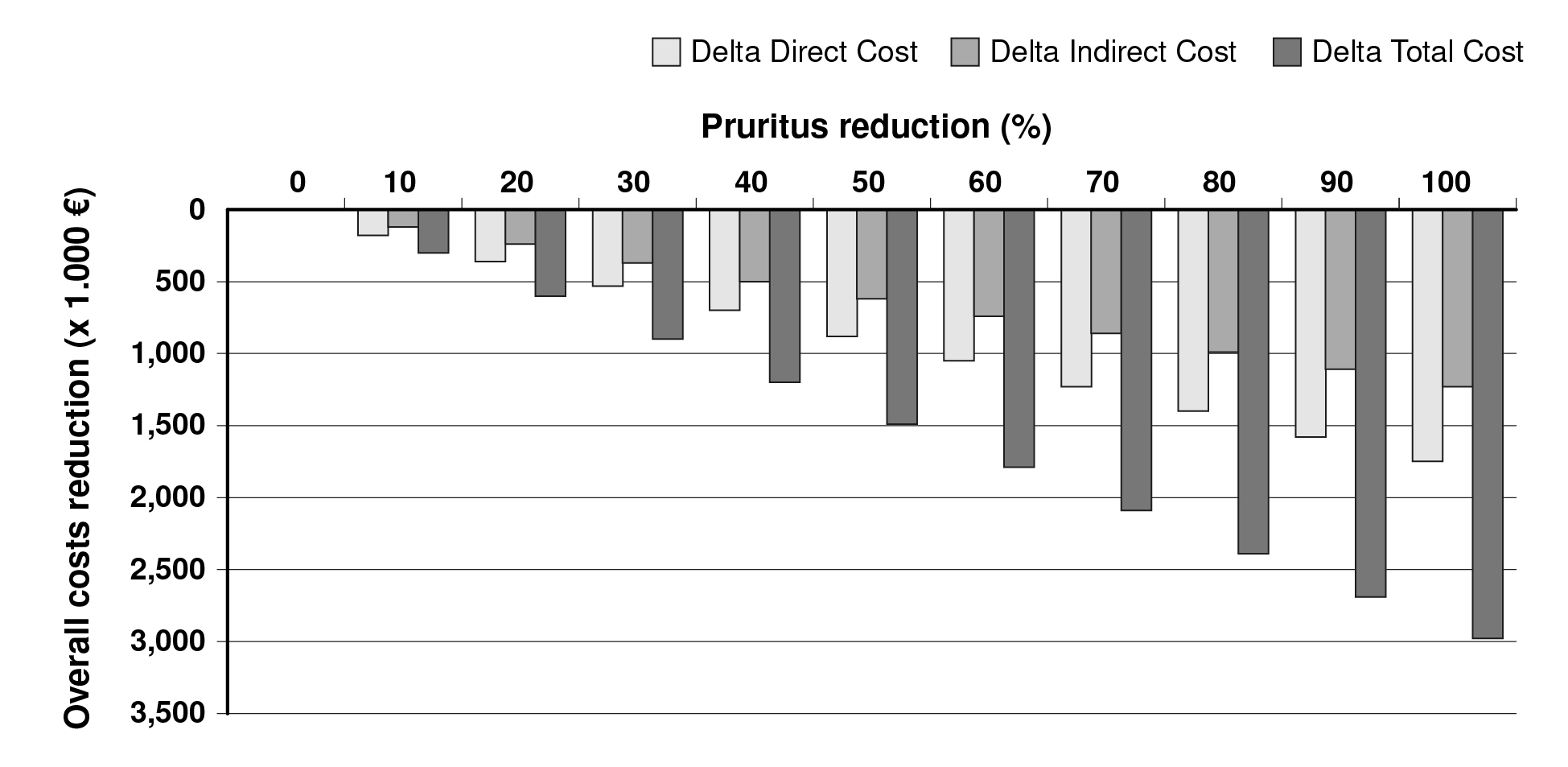
Figure 2. Sensitivity analysis: pruritus reductions and the related socio-economic burden variation
Discussion
Patients with PBC frequently reported debilitating symptoms such as pruritus, fatigue and cognitive impairment, which severely diminish their health-related quality of life regardless of ethnicity [1,4,5]. Pruritus affects up to 90% individuals during the course of their disease, with more than one-third experiencing moderate-to-severe itch [6–8].
The results of this study provide a comprehensive quantification of socio-economic and humanistic burden associated with cholestatic pruritus in PBC patients in Italy. By employing a prevalence-based COI model, this study evaluated not only direct healthcare expenditures, but also the major societal impacts driven by productivity loss and quality-of-life decrements. Our findings suggest that pruritus substantially contributes to disease-related disability in PBC, with an annual socio-economic impact of approximately € 6.75 million. Given that pruritus fluctuates over time and does not directly correlated with disease severity [9], this symptom could play an important role even in the early stages of this condition, where patients are still of working age and have not yet developed advanced stages of liver diseases, that are associated with higher socio-economic burden and quality of life impairment [20,21]. Furthermore, considering that the mean direct cost for a PBC patient in Italy is estimated at € 942 per patient-year [22], pruritus contributes significantly to the overall socio-economic burden of the disease, accounting for a mean direct cost of € 172 and a mean indirect cost of € 302 per patient-year.
Another finding of this study is the distribution of costs across pruritus severity levels. Although individual healthcare resource consumption is highest among patients with severe pruritus, mild pruritus accounts for 50.9% of all direct costs due to its high prevalence within the overall PBC population. A similar impact of mild-to-moderate symptoms was observed for indirect costs and HRQoL impairment, highlighting the importance of managing and reducing the pruritus burden across all severity levels rather than focusing exclusively on severe cases. This aligns with existing literature emphasizing that even low-level chronic cholestatic pruritus disrupts daily routines and requires long-term treatment and management [1,4].
In PBC, solid, unbiased data regarding HRQoL, resources consumption, and socio-economic outcomes (such as work absenteeism) remain limited, and data specifically isolating the burden of pruritus are even scarcer. The socio-economic burden estimates with the study reinforce the finding of the few existing studies evaluating the impact of pruritus on healthcare resources consumptions, work productivity, daily activity, and patients’ quality of life [4,6,10,11,23]. When interpreting our results against published evidence, it is crucial to distinguish between studies assessing the overall burden of PBC and those specifically evaluating pruritus-attributable burden.
Previous studies focusing on the broader PBC population consistently show that direct healthcare costs increase exponentially with liver disease progression, peaking in patients with decompensated cirrhosis or those undergoing liver transplantation. In these studies, pharmacological disease-modifying drugs and inpatient care represent the primary financial drivers for National Health Services. Conversely, literature specifically isolating cholestatic pruritus, demonstrates that the itch-related burden is uniquely characterized by indirect and intangible components [4,11,23]. Cholestatic pruritus triggers severe sleep disruption, chronic fatigue, and psychological distress, which directly translate into absenteeism, presenteeism, and reduced daily functioning. Our model confirms this dichotomy in the Italian setting, with the majority of pruritus costs associated to workplace productivity losses. In Italy, a cost of illness study estimated an average PBC-related healthcare costs of only € 942 per patient- year; however, that analysis did not include the main socio-economic burden drivers such as loss of productivity and quality of life impairment, assessed in our study [22]. In a recent US study examining the impact of pruritus on PBC management, quality of life and work activities [4], patients with moderate-to-severe pruritus reported a significantly higher rate of daily activity impairment (57% vs. 36%; p < 0.001) and a lower employment rate (42% vs. 53%) compared to those with no-mild pruritus. Furthermore, significantly worse outcomes, assessed with multiple instruments (5-D Itch, EQ-5D, FACIT-Fatigue, and CLDQ-PBC) were reported in patients with moderate-to-severe pruritus. Similarly, an analysis conducted on 211 patients included in TARGET-PBC observational cohort study reported a worse condition across each domain of the PBC-40 and 5-D itch, in patients with clinically significant pruritus. Notably 33% of these patients had never received antipruritic treatment [6]. To date, only one study has attempted to isolate the impact of pruritus on healthcare resources consumption and direct costs in PBC patients [23]. The study, based on the IQVIA PharMetrics® Plus database (Durham, North Carolina, USA), reported higher healthcare resource utilizations (proportion of patients with emergency room- and inpatient-related admission, number of outpatient visits, and medications) and higher follow-up costs in patients with pruritus compared with their matched controls.
Another important result of the analysis is the high impact of pruritus on work activities, with over 37,000 workdays lost (absenteeism) and 194,000 days of impaired productivity (presenteeism) annually. These findings reflect the marked productivity loss and lower employment rates reported by Levy et al. among patients with moderate-to-severe pruritus [4]; further they reported significantly lower employment rates in moderate-severe pruritus (42% vs 53%). One of the sensitivity analyses conducted in our study, incorporating an 11% unemployment rate specifically attributed to patients with moderate-severe pruritus, showed a socio-economic burden three times higher than the base-case. This suggests that the “human capital” losses associated with PBC and pruritus could be even more relevant.
Finally, the study estimate of 1,220 QALYs lost annually provides a quantitative metric for this symptom. The disutility weights used (ranging from 0.110 for moderate to 0.380 for severe) are comparable to those found in other severe chronic conditions like end-stage renal disease, dementia, severe psoriasis, and stroke, illustrating that cholestatic pruritus is not a “minor” symptom but a life-altering condition [24,25]. However, while EQ-5D disutility values offer a standardized benchmark, cross-condition comparisons (e.g., with stroke or ESRD) should be interpreted cautiously due to potential differences within studies.
The significant socio-economic burden associated to PBC patients with pruritus must be discussed with the low awareness of the pruritus burden in medical records [2,4,7] and with the lower percentage of moderate-severe pruritus patients that receive treatments for this symptom [4,10]. The pruritus-reduction scenarios highlight the substantial economic burden and QALYs lost that could be avoided by alleviating symptom severity in real-world clinical practice. These findings quantify the potential socio-economic benefits achievable if novel targeted therapies effectively reduce the prevalence and severity of cholestatic pruritus.
There are some limitations to this study that warrant discussion. The analysis relies on a theoretical COI model that combines data retrieved from international literatures, primarily from Anglo-Saxon countries using a bottom-up micro-costing approach. Although the model incorporates the most relevant and specific data available, certain inputs might not fully represent the specificities of Italian setting. Nevertheless, considering the current lack of real-world data specific for the Italian context, this analysis offers a robust and realistic estimate. Crucially, the transferability of key inputs to the Italian healthcare and societal context is supported by three main factors: the standardized clinical management and diagnostic criteria for PBC across Western European and North American guidelines (EASL/AASLD), the comparability of functional workplace impairment (WPAI domains) caused by chronic debilitating symptoms across industrialized economies, and the alignment of utility measurement instruments (EQ-5D) across European value sets. Italian real-world data are needed to confirm the model results and updating the model estimations. A second limitation is associated with the uncertainty of model parameters retrieved from published studies conducted on a small sample of patients; however, the probabilistic sensitivity analysis (PSA) and deterministic sensitivity analysis help mitigate data uncertainty and show the possible variability of the pruritus burden. Third, the Human Capital Approach used for indirect costs may underestimate the burden of those who are not in the formal workforce (e.g., homemakers or retirees), whose quality of life is equally diminished. Lastly, the model assumes a one-year time horizon; a longitudinal approach might reveal even higher cumulative costs as chronic sleep deprivation leads to secondary health issues. Fourth, it is worth noting that in patients with PBC, pruritus frequently co-occurs with other debilitating systemic symptoms, most notably fatigue [1]. While our model isolated pruritus-specific impact using severity-stratified WPAI metrics from Levy et al. [4], partial confounding from underlying disease fatigue cannot be entirely excluded. Future real-world studies employing multivariate interaction modeling are required to dissect the independent contribution of each symptom domain to overall productivity loss. Finally, the model applied constant annual disutility weights across patient tiers (ranging from 0.110 for moderate to 0.380 for severe pruritus). While individual itch intensity fluctuates over time [9], applying a static annual weight captures the cumulative, chronic detriment to health-related quality of life over a 1-year horizon, consistent with standard COI modeling conventions.
In conclusion, this study highlights that pruritus in PBC might represent a significant socio-economic challenge in Italy, characterized by high indirect costs and a profound loss of health-related quality of life. Current PBC management, while effective at slowing liver damage, often fails to address this symptom. By increasing awareness and adopting effective strategies and treatments that also target symptom control, the Italian healthcare system could realize a reduction in the socio-economic burden and, more importantly, restore years of productive and improve the quality life for PBC patients. Given that these findings are based on a theoretical COI model, future real-world studies are needed to confirm these estimates and evaluate the impact of emerging treatments on cholestatic pruritus in PBC patients.
Funding
The article was supported by Gilead Sciences Srl.
Conflicts of interest
P.A.C. has received consulting fees from Daiichi Sankyo, Boehringer Ingelheim Italia S.p.A. and Sanofi and speaker honoraria from Bayer, Roche and Boehringer Ingelheim.
M.C consults for and advises Advanz/Intercept, Gilead, GSK, Ipsen, Kowa, and Mirum. He consults for Alentis, Albireo, Alfasigma, Amgen, Calliditas, Echosens, Genetic SpA, Mayoly, Perspectum, and Zydus. He advises CymaBay, Falk, and Moderna.
C.P. is employees of Gilead.
L.G.M. reports receiving grants from Bayer, Daiiki-Sankyo, and Boehringer Ingelheim and speaker fees from Pfizer and Bayer.
PC and ICA have no conflicts of interest.
References
1.Tanaka A, Ma X, Takahashi A, et al. Primary biliary cholangitis. Lancet 2024; 404: 1053-66; https://doi.org/10.1016/S0140-6736(24)01303-5
2.European Association for the Study of the Liver. EASL Clinical Practice Guidelines: The diagnosis and management of patients with primary biliary cholangitis. J Hepatol 2017; 67: 145-72; https://doi.org/10.1016/j.jhep.2017.03.022
3.Tan JJ, Chung AH, Loo JH, et al. Global Epidemiology of Primary Biliary Cholangitis: An Updated Systematic Review and Meta-analysis. Clin Gastroenterol Hepatol 2025; 19:S1542-3565(25)00418-5; https://doi.org/10.1016/j.cgh.2025.03.025.
4.Levy C, Younossi ZM, Mayo MJ, et al. Assessment of PBC Pruritus From the ITCH-E Study. Quality of Life, Productivity, and Treatment Experiences Liver Int 2025; 45: e70276; https://doi.org/10.1111/liv.70276.
5.Rice S, Albani V, Minos D. Effects of primary biliary cholangitis on quality of life and health care costs in the United Kingdom. Clin Gastroenterol Hepatol 2021; 19: 768-76 10; https://doi.org/10.1016/j.cgh.2020.06.025
6.Mayo MJ, Carey E, Smith HT, et al. Impact of Pruritus on Quality of Life and Current Treatment Patterns in Patients with Primary Biliary Cholangitis. Dig Dis Sci 2023; 68: 995-1005; https://doi.org/0.1007/s10620-022-07581
7.Gungabissoon U, Smith HT, Maltzahn R, et al. Pruritus in primary biliary cholangitis is under-recorded in patient medical records. BMJ Open Gastroenterol 2024; 11: e001287; https://doi.org/10.1136/bmjgast-2023-001287.
8.Herta T, Franke A, Müller T, et al. Pruritus in primary biliary cholangitis: insights from the German PBC registry across secondary and tertiary care. Ann Hepatol 2025; 11;31(1):102140; https://doi.org/10.1016/j.aohep.2025.102140
9.Hegade VS, Bolier R, Oude Elferink RP, et al. A systematic approach to the management of cholestatic pruritus in primary biliary cirrhosis. Frontline Gastroenterol 2016; Jul;7(3):158-166; https://doi.org/10.1136/flgastro-2015-100618.
10.Smith HT, Souza AR, Thompson AH, et al. Cholestatic Pruritus Treatments in Primary Biliary Cholangitis and Primary Sclerosing Cholangitis: A Systematic Literature Review. Dig Dis Sci 2023; Jun;68(6):2710-2730; https://doi.org/10.1007/s10620-023-07862-z.
11.Smith H, Fettiplace J, Von Maltzahn R, et al. S107 More Than Just an Itch: Impact of... : American Journal of Gastroenterology. Am J Gastroenterol 2022; 117: p77-e78; https://doi.org/10.14309/01.ajg.0000857068.34886.fe
12.Marzioni M, Bassanelli C, Ripellino C, et al. Epidemiology of primary biliary cholangitis in Italy: Evidence from a real-world database. Dig Liver Dis 2019; 51: 724-29; https://doi.org/10.1016/j.dld.2018.11.008
13.IQVIA market research. (Data on file)
14.NICE. Elafibranor for previously treated primary biliary cholangitis. www.nice.org.uk/guidance/ta1016. Published November 14, 2024
15.Ministero della Salute. Decreto 25 novembre 2024 Definizione delle tariffe relative all’assistenza specialistica ambulatoriale e protesica. (24A06929) (GU Serie Generale n.302 del 27-12-2024). https://www.gazzettaufficiale.it/eli/id/2024/12/27/24A06929/SG. Accessed October 13, 2026
16.AIFA. AIFA list of drugs in category A/H and in the transparency list. https://www.aifa.gov.it/liste-farmaci-a-h
17.AIFA. Elenchi farmaci di classe A e H. https://www.aifa.gov.it/liste-farmaci-a-h. Accessed October 13, 2026
18.DemoISTAT. Italian population at 1° January 2025. https://demo.istat.it/app/?i=POS&l=it. Accessed February 12, 2026
19.Eurostat Databrowser. Eurostat 2024/2025. https://ec.europa.eu/eurostat/databrowser/view/nama_10_fte/default/table?lang=en
20.Cortesi PA, Conti S, Scalone L, et al. Health related quality of life in chronic liver diseases. Liver Int 2020; 40: 2630-42; https://doi.org/10.1111/liv.14647
21.Mol B, Werner E, Culver EL, et al. Epidemiological and economical burden of cholestatic liver disease. Hepatology 2025; 82: 813-33; https://doi.org/10.1097/HEP.0000000000001341
22.Gerussi A, Restelli U, Croce D, et al. Cost of illness of Primary Biliary Cholangitis - a population-based study. Dig Liver Dis 2021; 53: 1167-70; https://doi.org/10.1016/j.dld.2020.07.029
23.Gelhorn H, Halliday A, Hirschfield G, et al. Understanding the Burden of Itch in Primary Biliary Cholangitis: Reliable Patient Reported Outcomes Tools are the Key to Effective Pruritus Assessment and Management. EMJ 2025; 13: 2-9; https://doi.org/10.33590/emjhepatol/RQHZ4943
24.Sullivan PW, Slejko JF, Sculpher MJ, et al. Catalogue of EQ-5D scores for the United Kingdom. Med Decis Making 2011; 31: 800-804; https://doi.org/10.1177/0272989X11401031
25.Shiroiwa T, Noto S, Fukuda T. Japanese Population Norms of EQ-5D-5L and Health Utilities Index Mark 3: Disutility Catalog by Disease and Symptom in Community Settings. Value Health 2021; 24: 1193-1202; https://doi.org/10.1016/j.jval.2021.03.010
Appendix 1
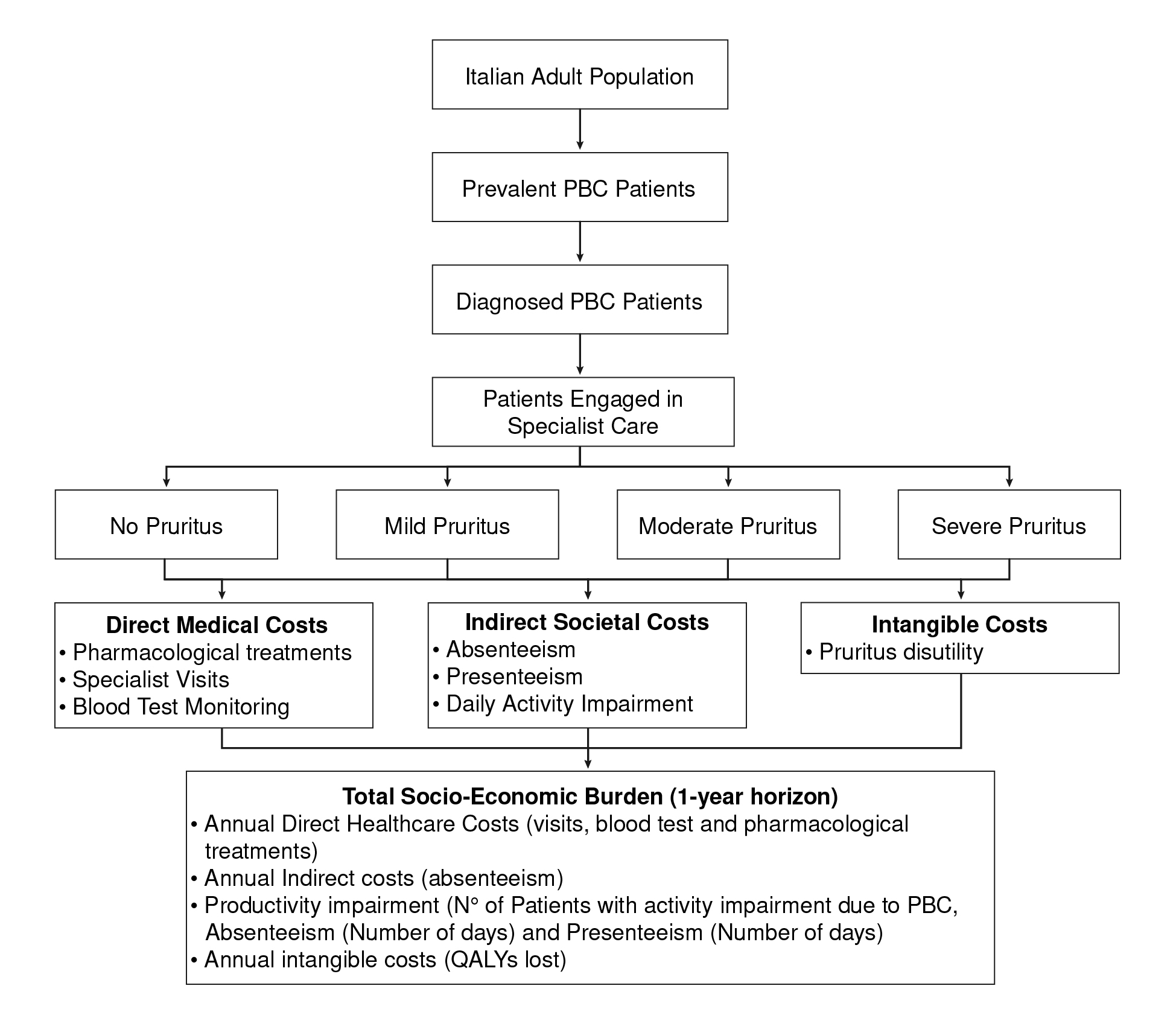
COI Model structure
Appendix 2
|
Parameters |
Lower pruritus prevalence – 23.0% [Herta 2025] |
Base case – 81.0% [Mayo 2023] |
Higher pruritus prevalence – 88.9% [Gungabissoon 2024] |
|
Overall costs (€) |
4,614,480 |
6,746,716 |
7,035,979 |
|
Direct costs (€) |
|||
|
Visits |
140,454 |
494,964 |
543,240 |
|
Blood test |
22,629 |
79,744 |
87,522 |
|
Pharmacological treatment |
333,488 |
1,175,260 |
1,289,860 |
|
Total direct cost (€) |
496,571 |
1,749,968 |
1,920,622 |
|
Indirect costs (€) |
|||
|
Patients with activity impairment due to PBC, n. |
1,977 |
2,075 |
2,088 |
|
Absenteeism, n. days |
30,832 |
37,413 |
38,301 |
|
Cost of absenteeism due to PBC, € |
4,117,909 |
4,996,748 |
5,115,357 |
|
Presenteeism, n. days |
168,020 |
194,143 |
197,663 |
|
Intangibile costs |
|||
|
QALYs lost |
346 |
1220 |
1340 |
Alternative scenario analyses: impact of pruritus prevalence
Appendix 3
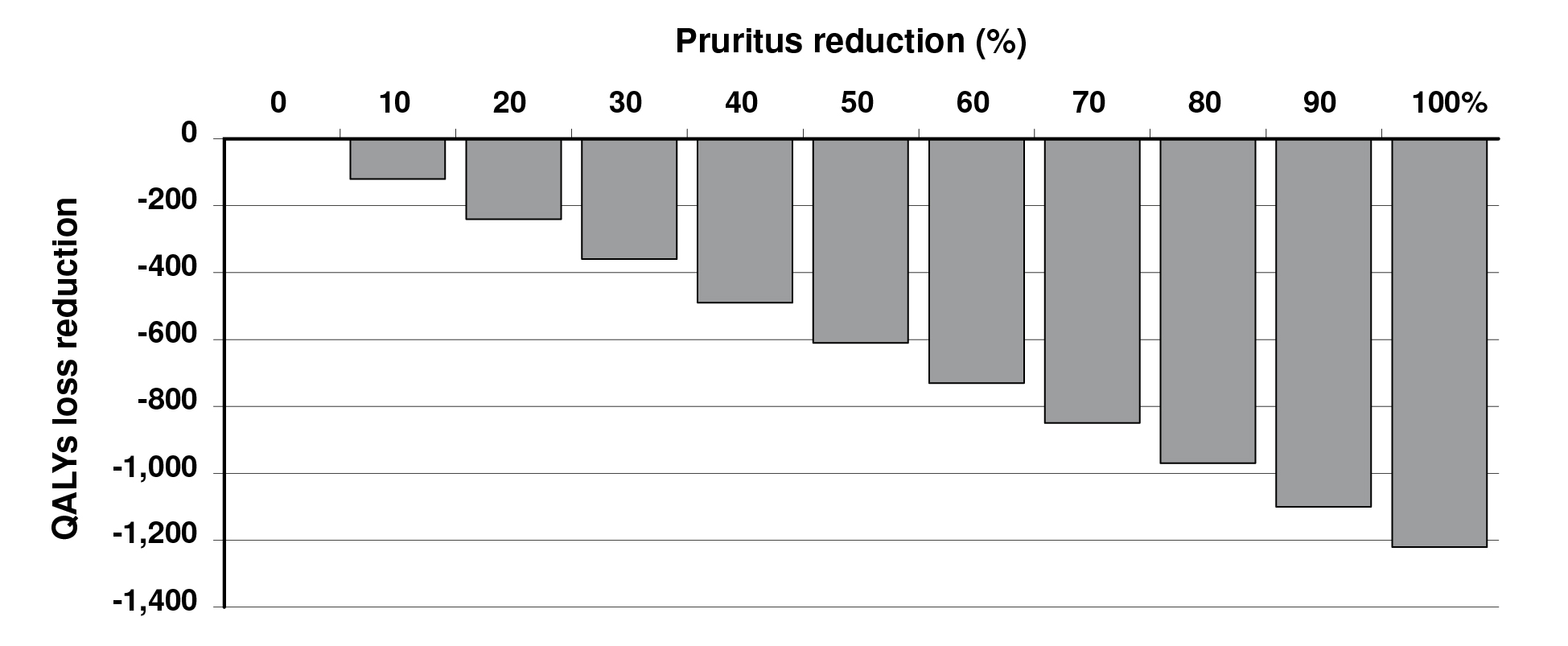
Sensitivity analysis: pruritus reduction and associated impact on QALYs lost